
Free VOIP Online Web Conferencing Software - The best bloopers are a click away
Watch this demonstration of how to use this free online conference room to train sales people, create a customer support help desk, show presentations to your downline, and more.

Webroot[R] Authorized Service Partner Program Extends Webroot's Award-Winning Antispyware and Antivirus Software to Regional Repair Professionals
BOULDER, Colo. -- Webroot, a leading security provider for the consumer, enterprise and SMB markets, today announced the Webroot[R] Authorized Service Partner Program, which extends Webroot's antispyware and antivirus solutions to consumers and small businesses through their local service providers. Computer repair professionals across the country now have access to exclusive pricing, technical services and resources from Webroot to ensure their customers receive the best protection for their home and corporate computers.
"The threat landscape continues to intensify in volume and complexity with roughly one in three computer users today experiencing viruses, spyware or phishing. In many cases, the nature of these threats requires the expertise of trained professionals in order to resolve them," said Paul Lipman, Senior VP and General Manager, Consumer Business, Webroot. "Partners of all sizes are more critical than ever to ensuring consumers and small businesses have the best protection available for their PCs. The Webroot Authorized Service Partner Program enables customers to receive world-class security technology and support from the computer repair professionals they know and trust within their own community."
The Webroot Authorized Service Partner Program features a self-service Web portal where partners can place orders 24 hours a day, obtain diagnostic tools to easily diagnose customers' computer problems, and participate in training webinars. In addition, program partners receive dedicated account management and free access to Webroot's US-based customer service team to help resolve customers' issues quickly and effectively.
"We joined the Webroot Authorized Service Partner Program because we wanted to offer our customers products that are truly best in class in the Internet Security sector," said Brandon Disney, Director of Operations and COO, Data Doctors Franchise Systems, Inc, which has been serving clients through stores across the country for more than 20 years. "Webroot, who's had a long history in the Internet security space and fantastic service history with us, has made doing business with us even easier with the new Web portal. It has all the tools we need right from the site. It has enabled us to service our customers even faster than before! It provides virtually all of the resources our regional stores need to support our customers, and the Webroot customer service team remains a fast, accurate and reliable additional line of support."
The Webroot Authorized Service Partner Program also currently includes strategic partners such as Computer Troubleshooters and Friendly Computers.
Additional benefits of the Webroot Authorized Service Partner Program benefits include:
* Free registration for a limited time
* Volume discounts on in-store or online sales
* Pre- and post-sales support
* Retail kits to support sales including marketing campaigns and co-branding opportunities
* Access to breaking research and white papers from Webroot's Threat Research team
Partners can access the portal at http://portals.webroot.com/servicepartners/ and can learn more by calling 1-800-772-9383.
PORTLAND, Ore. -- Centennial Software, developer of IT asset discovery and endpoint security solutions, today announced that TechExcel, a leading provider of integrated IT service management, customer support, and application lifecycle management solutions, has selected Centennial Discovery for integration with its HelpDesk Suite. TechExcel HelpDesk Suite will leverage Centennial Discovery's automated IT asset discovery capabilities for complete IT asset identification and inventory management.
"The ability to automate the discovery and identification of all hardware and software assets on a network in real-time will significantly streamline and optimize any corporate help desk," says Andy Burton, CEO at Centennial Software. "By combining Centennial's dynamic auto-discovery with TechExcel's excellent HelpDesk Suite, customers can leverage a powerful new tool that eliminates the need for manual asset tracking and provides network or user details at the touch of a button for true help desk optimization."
Discovery is the most powerful and comprehensive software tool available for dynamically finding, identifying and auditing all corporate hardware and software on a network. The integration of Centennial Discovery into TechExcel's AssetWise module -- due for completion later this year -- will eliminate the need for manual asset tracking and streamline IT inventory discovery and management. Users of AssetWise will benefit from reduced average help desk call times, handle more calls with the same number of agents, and more easily troubleshoot network problems through more accurate awareness of network assets.
"We like to tout how flexible and easy to use TechExcel's HelpDesk Suite is for customers that want a completely customizable helpdesk solution," said Tieren Zhou, President and CEO at TechExcel. "With Centennial Discovery, we're delivering to our customers another level of functionality by integrating the most comprehensive discovery engine available on the market and automating the solution so it's easier to use and manage."
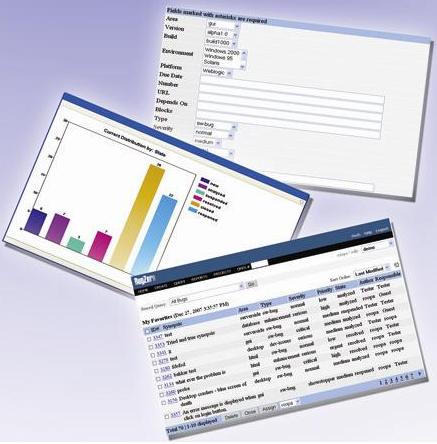 Companies that use help desk software note the many benefits of having it. Flexibility in web-based programs and the ability to effectively organize and manage trouble tickets are two of the most prominently praised features. Many businesses are now realizing the importance of help desk tracking software. They’ve learned that effectively managing consumer issues can create a loyal customer base. Help desk tracking software is a vital component in help desk technology. Your competitors know the benefits of help desk programs. In order to stay abreast of current trends and customer expectations, you should too.
Help desk tracking software allows your company to deliver effective and timely responses to customer trouble tickets. By using a ticket-tracking program, you can prioritize and manage all incoming and outgoing responses. Tracking software also allows customer and technical support personnel to check the status of queries they have already submitted.
The ticket categorization feature of many help desk tracking software programs is also very helpful. Most programs allow the user to organize incoming tickets on the basis of category, channel and priority. Instead of having technicians spend countless hours sifting through emails, tracking software successfully manages the tickets. This means more time for your personnel to spend working tickets, and a more productive workday.
Effectively managing trouble tickets can set your company at a higher standard than your competitors. Customers in today’s world want instant access to their questions and many expect and rely upon 24 hour support 7 days a week. Help desk software can also compile a list of the most frequently asked questions so that your customers can find solutions to their problems without contacting a technician. Quality customer and technical support is valuable to your business strategy, and ignoring this need can mean loss of business. Help desk tracking software is one among many ways to better manage your inbound service inquiries.

When an enterprise is spread from coast to coast, the last thing that IT directors want to do is literally go the distance for training, troubleshooting and help desk answers. Not only can this potentially hamper the growth of an enterprise, the physical distance can bog it down, starting with the IT department. Kisco Senior Living is a growing enterprise of some 3,500 residents divided between independent and assisted living facilities and senior apartment communities on both coasts. Founded in 1990, Kisco has grown to 26 communities in California, Nevada, Virginia, North Carolina, Georgia and Florida, with a primary office in Carlsbad, California.
For Kisco Senior Living's IT Director Kirk Lewis, the challenge of supporting and maintaining a corporate network of 20 servers with over 400 workstations is about more than maintaining the servers. It means clearing help desk tickets and creating streamlined training for back office departments and personnel with trainers and new hires separated by hundreds of miles.
As in most growing enterprises, Kisco is focused on hiring personnel with the right skills and personalities for their particular departments rather than their computer skills. Additionally, it is one of Kisco's goals to have their staff spend as much time with residents as possible and the least amount of time in front of computers. Consequently, new hires were in need of training and help in using many of the basic software programs like Word, Outlook and Excel. The challenge was talking them through their issues, which was a very time consuming process for a small IT department.
As in most growing enterprises, Kisco is focused on hiring personnel with the right skills and personalities for their particular departments rather than their computer skills. Additionally, it is one of Kisco's goals to have their staff spend as much time with residents as possible and the least amount of time in front of computers. Consequently, new hires were in need of training and help in using many of the basic software programs like Word, Outlook and Excel. The challenge was talking them through their issues, which was a very time consuming process for a small IT department.
Bridging the Distance Barrier
When Lewis started with Kisco some five years ago, the enterprise had 13 communities with 1,000 employees and 150 computers. Originally, as an IT department of one, it was imperative that Lewis and Kisco find some type of remote control software that would allow him to administrate servers, fix PC issues remotely and also train remote users so that they would not need to call again for a particular issue.
Although there were several options available then, all but one lacked the specific features that were of greatest importance to Lewis. According to Lewis, most of the remote PC control software of the time didn't allow him to initiate the program before a user logged onto their computer. "That meant that I couldn't actually see their login screen and get into the system earlier to help them if they had forgotten their password or other issues," says Lewis. "Another concern was that all of the other available remote control programs at the time used too much processing power just sitting idle in the background waiting for me to connect."
Lewis ultimately chose Proxy Networks Remote Control software and immediately implemented it to those facilities nearest him. From there he outsourced to a third party who installed the software locally or had someone in the community that was tech savvy install it. "I was able to support those 150 users by myself and close all of the help desk calls," says Lewis.
After leaving Kisco for several years, Lewis returned a year ago to find that they were still using Proxy. However, his replacement had installed another remote control software program in addition to Proxy, creating a somewhat chaotic situation. There were now three people in IT, but the community had nearly doubled to 25 communities. "For a while, we had difficulty figuring out which remote software was running on which PCs, so I made Proxy the defacto standard on all of them, which took about six months."
Lewis and his staff simultaneously implemented help desk software in order to track tickets, revealing an average of 42 days for an open help desk ticket. In the first six months they were able to reduce that time to four days and then six months later had it down to less than 24 hours. "What helped was implementing a single remote control software solution throughout the entire portfolio of communities, so that when a call came in for help, we didn't have to figure out how to remotely control that PC," explains Lewis.
With an average of 20 or 30 help desk calls a day, every minute spent clearing them counts. When Kisco had the opportunity to upgrade their Proxy software with Proxy Gateway Server, they saw an opportunity to better manage help desk calls via its virtual server function, making all of the PCs and servers on the network visible and instantly accessible. "It now takes ten seconds instead of two minutes to find a user's PC, and as the enterprise grows, we'll be able to save even more time," says Lewis.
Departmental Training
As a bicoastal enterprise, Kisco was dealing with turnover due to certain demographic and departmental factors. Since efficiency and quality service were paramount, Kisco needed to standardize procedures for all of its facilities. That meant increased operating cost due to the need for flying out trainers from the IT department and other areas, such as accounting, marketing and even dining services. "It occurred to us that we could put Proxy Master on the PC of the person doing the training so that they could train remotely as well," says Lewis. "In effect, this gave us a support tool and a training tool in one solution, saving us thousands of dollars in travel cost."
As a departmental area with a historical high degree of turnover, the accounting department became the first remote training target for Lewis and Proxy Networks.With the evident accounting department success, Lewis then offered it to the marketing department as a remote training tool. It wasn't long before the IT department had implemented Proxy as a training tool for dining services.

Kaseya Allows Company to Prioritize, Track, Resolve and Report Tickets from Consolidated Console
ST. HELIER, Jersey -- Kaseya--a global provider of information technology (IT) automation software for IT solution providers and corporate IT organizations --announced today that Beltone New England has centralized its ticketing and help desk systems on Kaseya, giving the leading hearing aid provider a single platform in which to prioritize, track, resolve and report help desk issues. The Kaseya framework integrates help desk and ticketing with proactive systems maintenance, monitoring and remote access, allowing the company to quickly identify, troubleshoot and report availability and performance issues faced by a distributed and mobile workforce.
"All the information we need to quickly resolve issues is right there in a single, consolidated management platform," said Mayur Kirtani, director of IT, Beltone New England. "As a result, we're more efficient with our time, and issues--regardless of if they are down the hall or 300 miles away--are being resolved much faster and with a much higher degree of accuracy."
A company founded on quality customer service, Beltone New England requires its health care practitioners and audiologists to record all sales in the company's Web-based point of sale application, giving customers the peace of mind that their transactions are complete and accurate without having to receive a bill in the mail or fill out additional paperwork at a later date. The timeliness of reporting sales also helps the company plan revenue projections and record transactions in the appropriate accounting column. This reliance on application availability puts the onus on the company's IT staff to ensure the health of the workstations and mobile devices used by a distributed sales force.
Kaseya's low-footprint agent is deployed on 150 workstations spread over 50 offices in the Northeast U.S. and two virtualized servers running the organization's mail, security and BlackBerry[R] business systems. The Kaseya solution allows the IT staff to proactively monitor, patch, secure and back up each system from a consolidated management console, helping to streamline basic administration and ensure consistency throughout the environment--both proactive components to reducing help desk issues and heading off concerns before they lead to availability or performance problems down the road.
"Kaseya gives me all the information I need on one screen in which it quickly resolve help desk issues, allowing me to organize my time and IT resources more efficiently and more in line with business priorities," Kirtani said. "Resolving issues faster and more accurately reduces downtime, giving employees reliable access to our most mission-critical piece of business software--the point of sale application."
According to an audit conducted by Beltone New England, one hour of downtime can cost the company $3,000 per hour per office in lost sales or late-filed transactions. With 50 offices, application availability is directly tied to whether the company meets or exceeds its revenue goals. Now that the average help desk issue is resolved in several minutes as opposed to up to 45 minutes previously, the IT staff is able to ensure business continuity and enable a financially-healthy organization.
"Having an effective method for end users to file reports and track tickets is vital to providing quality support for any IT organization," said Jim Alves, executive vice president of product marketing, Kaseya. "This central repository and transparency makes it possible to take a proactive approach to IT management, tying monitoring, help desk, systems maintenance, inventory tracking, end point security and backups together under a consolidated console."
For more information about Beltone New England and its use of Kaseya please visit www.kaseya.com/itprofessional/success_images/Beltone.CS.kaseya.pdf.

LiveTime Releases Service Management and Help Desk Software for Mac OS X Leopard and Leopard Server, and Introduces Optimizations for Safari 3.0
NEWPORT BEACH, Calif. -- LiveTime Software, a leading provider of ITIL certified Web 2.0 Service Management, Help Desk and Customer Support Software, today announced an update to its Service Management suite to address compatibility with Safari 3.0 and Mac OS Leopard. LiveTime can now be deployed on Mac OS X Leopard in both desktop and server editions with no additional requirements.
LiveTime and Apple's strong commitment to open standards makes Mac OS X Leopard a perfect platform for delivery of LiveTime's Service Management and Help Desk product suite. The application server infrastructure and plumbing required for LiveTime is built directly into the operating system. Simply populate any SQL database with the LiveTime schema, deploy the application in either the JBoss or Tomcat application containers and the system can be operational in less than 30 minutes.
LiveTime has also optimized the presentation layer on Mac OS X Leopard by making specific changes for Safari 3.0 for a rich user experience with its Web 2.0 interface. LiveTime's integrated spelling, online chat and RSS feeds provide completely new levels of interactivity for customers.
LiveTime's Help Desk and Service Manager enables enterprises to automate the service desk function using a combination of industry acknowledged best practices and best of breed technology. LiveTime's automated service desk process allows customers to submit, track and manage service support requests via email or the customer portal based on Web 2.0 and open standards.
Subscribe to:
Posts (Atom)




